The cardinal error in lift emergency power is sizing one average battery for two duties that share nothing but an outage. Paper B keeps the ARD surge calculation and the intercom endurance calculation deliberately separate, then builds each from an itemised load list, derates for efficiency, depth of discharge, temperature and end-of-life fade, compares the candidate chemistries on lift-specific axes, and sets out the pack and charger architecture - including the special case of a five-party intercom network - that lets a lift manufacturer meet EN 81-20 and EN 81-28 with margin to spare.
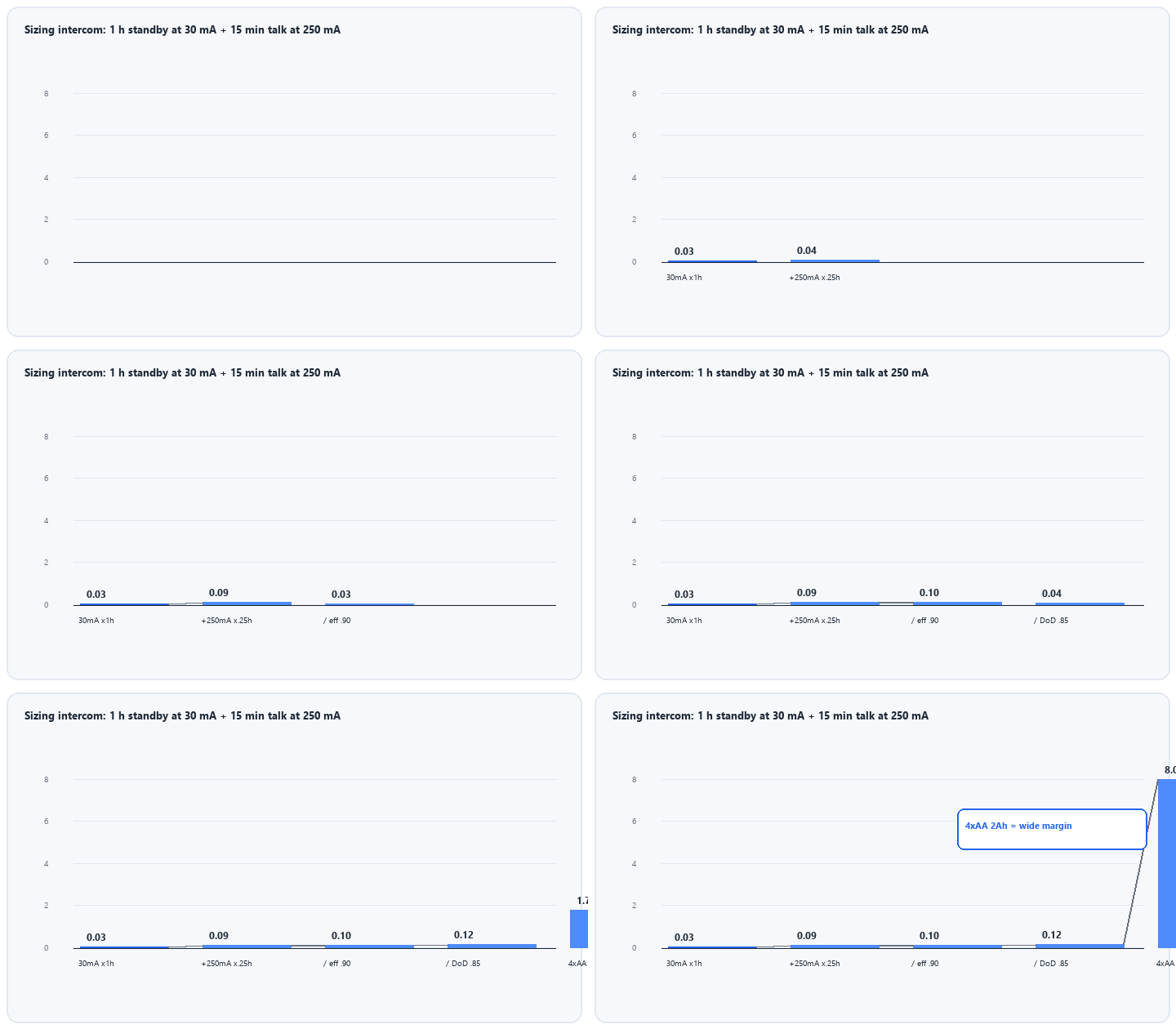
The intercom energy budget is small but must be computed precisely. Enumerate the car station, each remote station in a five-party network, the auto-dialler or GSM/IP module in idle and in call, and any indicator or line-interface standing loads. Multiply the summed standby current by the required one-hour standby and the summed talk current by the required talk time - fifteen minutes minimum, doubled by prudent manufacturers. The animated waterfall works a representative single-station case: 30 mA for one hour plus 250 mA for a quarter-hour of talk is only about 0.09 Ah of raw energy, which is why a four-AA, 2 Ah NiMH pack provides such a wide, deliberate margin for cold, fade and repeated calls.
That margin is the point. The raw energy is trivial; the engineering decision is to carry enough nameplate capacity that the one-hour-plus-fifteen-minute promise still holds after years in a cold machine room and after multiple rescue conversations, not just on the bench.
The ARD calculation is driven by power and voltage sag as much as by ampere-hours. Determine the torque the machine needs to move the worst-case car load slowly to the nearest floor, the current that implies at the drive's DC input, the maximum acceptable duration (one rescue, with margin for a retry), and the voltage floor below which the drive faults. High-rate NiMH cells - sub-C and similar power formats - offer low internal resistance and a strong discharge plateau, so a compact string can supply the control and contactor coil surge, and in small ARDs assist the drive, without the voltage collapse that would abort a rescue.
Where the traction energy is large, lead-acid or a dedicated drive battery remains appropriate for the main motor power; NiMH's strongest ARD role is in the control, brake-release and contactor circuits and in compact residential ARDs, where its high-rate behaviour, cold tolerance and long readiness life outperform a small lead-acid block that has sulphated through years of standing.
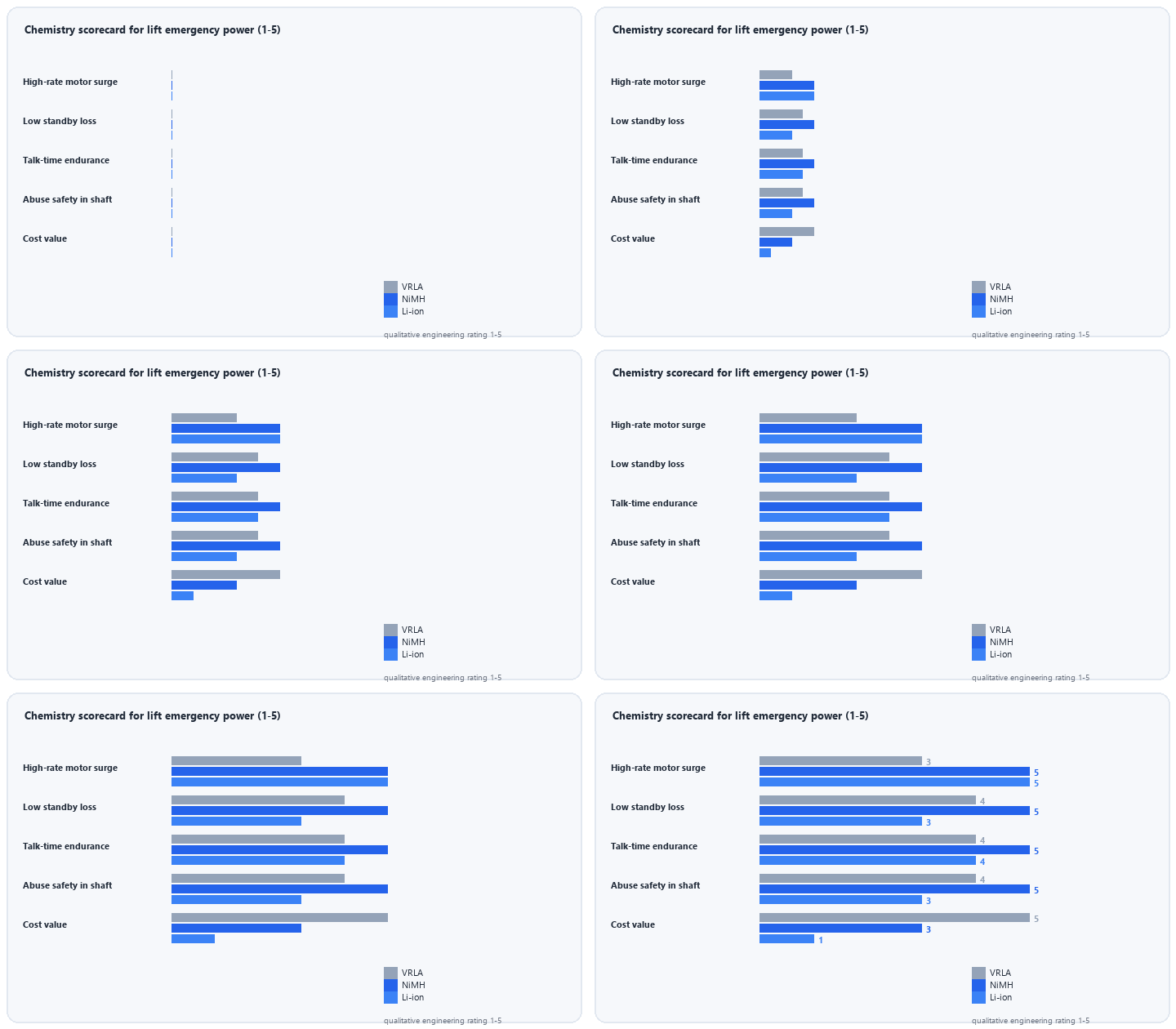
The animated scorecard rates lead-acid, NiMH and lithium on five axes: high-rate motor surge, low standby loss, talk-time endurance, abuse safety in the shaft and cost value. Lead-acid wins raw energy cost for large ARDs but is heavy, sulphates in long readiness and is weak in the cold. Lithium is energy-dense but requires protection electronics and carries transport and ageing considerations in a safety device expected to last the lift's service life. NiMH scores strongly on surge, endurance and abuse safety, with a flat plateau that suits both the contactor coil and the audio amplifier, and the simplest shipping profile for spare packs sent to maintenance depots.
The honest design position is a split architecture: size the main ARD energy store to the machine, and use NiMH for the always-available intercom and the ARD's control and brake circuits where its characteristics dominate. Paper A's real four-AA-NiMH intercom example is exactly this philosophy in production.
A five-party intercom changes the standby arithmetic. The car, car-top, pit, machine-room and duty-room stations each present an amplifier and line interface with a standing current, and a rescue may link several at once. Build the load table per station, sum the idle currents for the one-hour standby, and use the realistic worst-case multi-station talk current - often two or three stations active - for the fifteen-minute (or doubled) talk term. Cold and long cable runs to pit and shaft-top stations add voltage-drop considerations that favour a stable, low-impedance source and adequate conductor sizing.
Because the summed standby current is higher than a single handset suggests, the five-party pack is larger than a single-station design even though talk events are brief; applying the same derating waterfall protects the required autonomy at end of life and in winter.
Lift emergency packs live with vibration from passing cars, temperature swings and years untouched. Welded nickel tabs, a rigid carrier and shock-tolerant cell retention outperform loose sprung holders; keyed, latching connectors resist the micro-movement that causes intermittent alarm faults; and an accessible, labelled form factor lets a maintenance engineer swap the pack during periodic inspection. Low-self-discharge NiMH grades are particularly valuable here, because a pack that retains most of its charge over many months of silence is far more likely to be ready on the rare day it is needed.
Cell matching matters as in every series string: matched-lot cells sorted for capacity and internal resistance prevent a weak cell from limiting the talk plateau or sagging under the ARD control surge, and a thermal fuse or PTC provides fault protection appropriate to a safety device.
The charger must keep the pack ready across the lift's life without the overcharge that dries an aqueous cell: a maintenance current at or below C/20 or a temperature-compensated float, with thermistor reduction in a hot machine room, restores energy after a test or event and then holds readiness gently. EN 81-28 functionality testing - disconnecting the supply, verifying the alarm raises and two-way speech is clear on backup, and then removing the batteries to confirm the low-battery behaviour - is a recurring real-world test, documented by manufacturers such as 2N, that the pack must pass indefinitely.
Supporting that periodic test with a stable, well-characterised pack - and the evidence trail Paper C describes - is what turns a regulatory checkbox into a genuinely reliable rescue system.
Weijiang Power builds NiMH packs for lift emergency intercoms and ARD control circuits to EN 81-20 and EN 81-28: matched welded AA/sub-C strings for one-hour standby plus doubled talk margin, high-rate low-impedance cells for brake and contactor surges, low-self-discharge grades for years of shaft readiness, and IEC 61951-2, IEC 62133-1 and UN 38.3 documentation. Send your five-party station schedule, talk currents and ARD control load for a sized calculation.


